
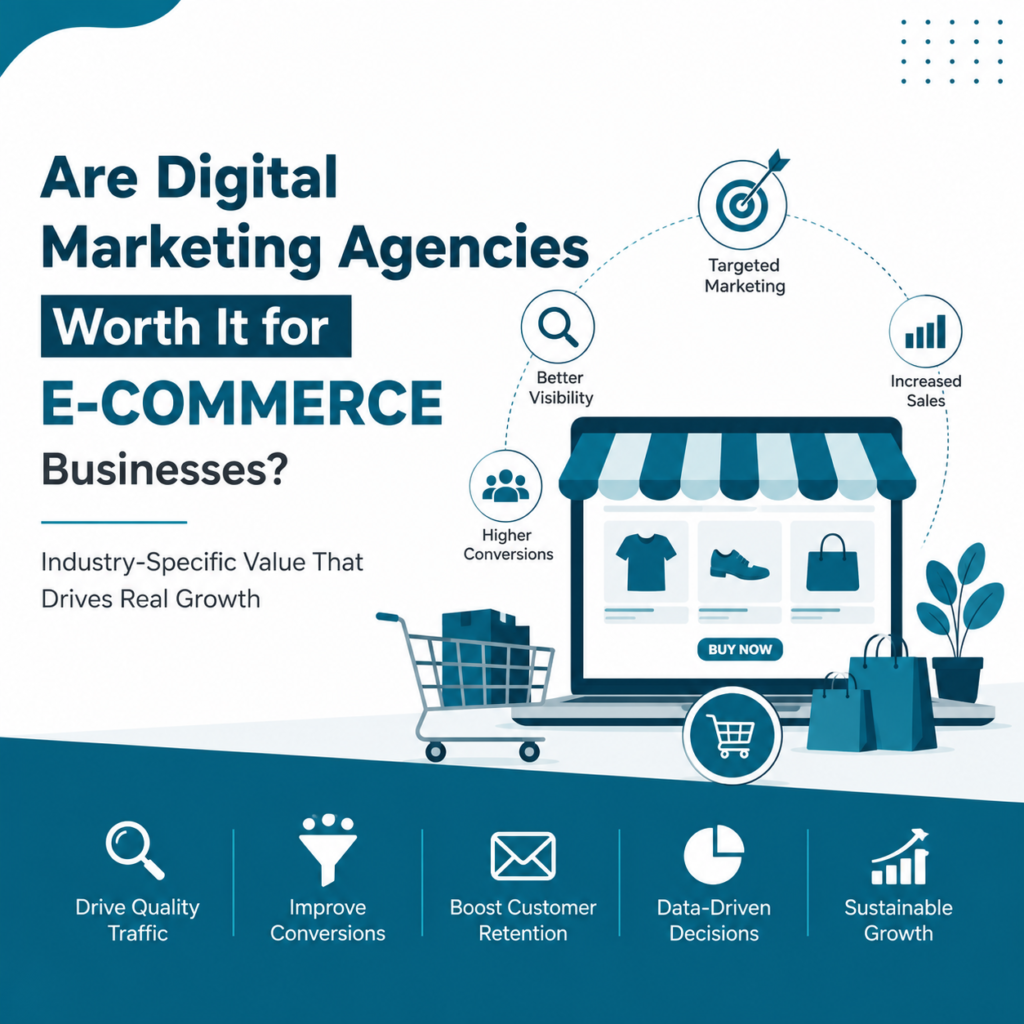
Introduction: The Rise of E-Commerce Competition
The e-commerce industry has transformed the way consumers purchase products. From fashion and electronics to groceries and home décor, virtually every category now competes in a crowded digital marketplace. Launching an online store has become easier than ever, yet attracting customers has become significantly more challenging.
Consumers compare prices instantly, read reviews, browse multiple websites, and expect seamless shopping experiences. In this competitive environment, businesses must move beyond simply listing products. Strategic digital marketing has become a critical factor in achieving sustainable growth.
Why Marketing Is Essential for Online Stores
A professionally designed website alone cannot guarantee sales. Without visibility, potential customers may never discover an online store.
Digital marketing enables businesses to:
- Increase website traffic
- Improve product visibility
- Generate qualified leads
- Build customer trust
- Convert visitors into buyers
- Encourage repeat purchases
Every marketing activity contributes to creating a stronger online presence and a healthier sales pipeline.
Understanding the Role of a Digital Marketing Agency
A digital marketing agency provides specialized expertise across multiple disciplines. Instead of relying on trial and error, businesses gain access to experienced professionals who manage marketing campaigns with precision.
Typical agency services include:
- Search Engine Optimization (SEO)
- Google Ads Management
- Social Media Marketing
- Meta Advertising
- Email Marketing
- Content Creation
- Conversion Rate Optimization
- Analytics and Reporting
These services work together to create an integrated marketing ecosystem rather than isolated campaigns.
Common Challenges Faced by E-Commerce Businesses
Customer Acquisition Costs
Advertising expenses continue to rise as competition intensifies. Many businesses struggle to acquire customers profitably because campaigns lack optimization or target the wrong audience.
An experienced agency continually refines audience segmentation, bidding strategies, and creative assets to improve acquisition efficiency.
Low Website Conversion Rates
Traffic alone does not guarantee revenue. Many stores receive thousands of visitors but convert only a small percentage into customers.
Improving page speed, simplifying navigation, enhancing product pages, and strengthening calls-to-action can significantly increase conversion rates.
High Cart Abandonment
Customers frequently add products to their carts but leave before completing checkout.
Agencies reduce abandonment through:
- Simplified checkout processes
- Exit-intent offers
- Automated reminder emails
- Retargeting advertisements
- Trust badges and secure payment messaging
How Agencies Create Industry-Specific Marketing Strategies
Every e-commerce business operates differently. A beauty brand requires different messaging than an industrial equipment supplier.
Digital marketing agencies analyze:
- Target audience demographics
- Buying behavior
- Competitive landscape
- Product pricing
- Customer journey
- Seasonal demand
This research enables campaigns that resonate with specific customer segments rather than relying on generic promotional tactics.
Search Engine Optimization (SEO) for Sustainable Growth
SEO delivers long-term visibility by helping products appear in organic search results.
Instead of paying for every visitor, businesses earn traffic through optimized content and website structure.
Technical SEO
Technical optimization includes:
- Faster page loading
- Mobile responsiveness
- Crawlability
- Secure HTTPS implementation
- Structured data
- XML sitemaps
These improvements enhance both search rankings and user experience.
Product Page Optimization
Each product page should include:
- Keyword-rich titles
- Unique product descriptions
- Optimized images
- Internal links
- Customer reviews
- Frequently Asked Questions
Well-optimized pages attract both search engines and potential buyers.
Content Marketing
Educational blogs, buying guides, and comparison articles establish topical authority while attracting informational search traffic.
Quality content also supports internal linking strategies and improves overall domain relevance.
Paid Advertising That Generates Sales
Paid advertising provides immediate visibility for products and promotions.
Unlike organic marketing, paid campaigns deliver measurable results within a shorter timeframe.
Google Shopping Campaigns
Shopping ads display product images, pricing, reviews, and store information directly within search results, helping customers compare products quickly.
Search Ads
Search campaigns target high-intent users actively looking for products. Proper keyword research ensures advertisements appear when purchasing intent is strongest.
Performance Max Campaigns
Performance Max campaigns use machine learning to distribute advertisements across Search, Display, YouTube, Discover, Gmail, and Maps, maximizing reach and efficiency.
Social Media Marketing for Product Discovery
Modern consumers frequently discover products through social media rather than search engines.
Consistent posting, engaging videos, customer testimonials, and educational content build brand awareness while nurturing customer relationships.
Visual storytelling transforms ordinary products into memorable experiences.
Meta Advertising for E-Commerce Brands
Meta platforms enable highly targeted advertising based on interests, behaviors, demographics, and previous website interactions.
Popular campaign objectives include:
- Catalog Sales
- Website Purchases
- Dynamic Retargeting
- Lead Generation
- Brand Awareness
Advanced audience segmentation increases advertising efficiency while reducing wasted spend.
Email Marketing and Customer Retention
Email remains one of the highest-return digital marketing channels.
Automation sequences can include:
- Welcome emails
- Cart abandonment reminders
- Product recommendations
- Post-purchase follow-ups
- Loyalty rewards
- Re-engagement campaigns
Retaining existing customers is generally more cost-effective than constantly acquiring new ones.
Conversion Rate Optimization (CRO)
CRO focuses on improving the percentage of visitors who complete a desired action.
Common optimization techniques include:
- A/B testing
- Simplified checkout
- Better product imagery
- Improved call-to-action buttons
- Enhanced trust indicators
- Clear shipping information
Small improvements often generate substantial increases in revenue without increasing advertising budgets.
Data Analytics and Performance Tracking
Successful marketing decisions depend on reliable data rather than assumptions.
Agencies monitor:
- Website traffic
- Conversion rates
- Customer lifetime value
- Average order value
- Return on Ad Spend (ROAS)
- Customer Acquisition Cost (CAC)
Continuous analysis enables informed decision-making and ongoing optimization.
Branding That Builds Customer Trust
Strong branding differentiates businesses in competitive markets.
Consistent visual identity, authentic messaging, positive customer reviews, and transparent communication create credibility that encourages repeat purchases.
Trust often becomes the deciding factor when multiple retailers sell similar products.
Influencer and Creator Collaborations
Influencer partnerships introduce products to highly engaged audiences.
Micro-influencers, in particular, often generate stronger engagement because of their authenticity and niche expertise.
Strategic collaborations enhance visibility while providing valuable social proof.
Seasonal Campaign Planning
Consumer purchasing behavior fluctuates throughout the year.
Agencies prepare campaigns for:
- Holiday sales
- Festive promotions
- Clearance events
- Product launches
- Anniversary campaigns
- Regional celebrations
Planning ahead allows businesses to maximize seasonal demand and maintain operational readiness.
Omnichannel Marketing Strategies
Modern shoppers interact with brands across multiple touchpoints.
An omnichannel approach integrates:
- Website
- Search engines
- Social media
- Paid advertising
- Mobile experiences
Consistent messaging across channels strengthens recognition and improves customer experience.
Benefits of Outsourcing to an Agency
Partnering with a digital marketing agency offers several advantages:
- Access to experienced specialists
- Faster implementation
- Reduced learning curve
- Advanced marketing tools
- Continuous optimization
- Strategic insights
- Scalable campaign management
Businesses can focus on product development and customer service while marketing experts manage growth initiatives.
When Hiring an Agency Makes Financial Sense
Hiring an agency is particularly valuable when:
- Sales growth has plateaued
- Advertising budgets are increasing
- Internal marketing expertise is limited
- Expansion into new markets is planned
- Competition has intensified
Professional guidance can prevent costly mistakes and accelerate business growth.
Situations Where an Agency May Not Be Necessary
Not every business requires agency support.
Businesses may manage marketing internally when:
- Marketing budgets are extremely limited.
- Sales objectives remain modest.
- The owner possesses advanced digital marketing expertise.
- Product demand consistently exceeds supply.
Evaluating current business needs helps determine the most suitable approach.
How to Choose the Right Digital Marketing Agency
Selecting an agency requires careful evaluation.
Consider factors such as:
- Industry experience
- Proven case studies
- Transparent reporting
- Communication quality
- Technical expertise
- Client testimonials
- Pricing structure
- Long-term strategic capabilities
The right partnership extends beyond campaign execution to become a valuable contributor to business growth.
Measuring Return on Investment (ROI)
Marketing success should always be measured through tangible business outcomes.
Key performance indicators include:
- Revenue growth
- Return on Ad Spend (ROAS)
- Customer Lifetime Value (CLV)
- Conversion Rate
- Repeat Purchase Rate
- Customer Acquisition Cost (CAC)
Regular reporting ensures accountability and facilitates continual improvement.
Common Mistakes Businesses Make When Hiring Agencies
Several mistakes reduce marketing effectiveness:
- Choosing based solely on price
- Expecting immediate results
- Ignoring long-term SEO investment
- Failing to define objectives
- Not reviewing performance reports
- Frequently changing strategies
Strong collaboration between business owners and agencies produces the best outcomes.
Future Trends in E-Commerce Marketing
The digital landscape continues to evolve rapidly.
Emerging trends include:
- Artificial Intelligence-powered personalization
- Predictive analytics
- Voice search optimization
- Visual search technology
- Conversational commerce
- First-party data strategies
- Privacy-focused advertising
- AI-assisted customer support
Businesses that adapt proactively will maintain a competitive advantage.
Final Verdict: Are Digital Marketing Agencies Worth It?
For many e-commerce businesses, partnering with a digital marketing agency represents a strategic investment rather than an operational expense. Agencies contribute specialized expertise, advanced analytical capabilities, and proven marketing frameworks that are often difficult to build internally.
Their ability to optimize advertising campaigns, improve search visibility, enhance conversion rates, and strengthen customer retention creates measurable business value over time. While not every online store requires agency support, businesses aiming for scalable growth, stronger brand recognition, and higher profitability frequently benefit from professional guidance.
Ultimately, the decision should align with business objectives, available resources, and long-term growth ambitions. When selected thoughtfully and managed collaboratively, a digital marketing agency can become a powerful growth partner, helping e-commerce businesses navigate competitive markets with confidence and achieve sustainable success.