
Introduction
Selecting a digital marketing company is no longer a peripheral business decision. It is a consequential investment that can either accelerate growth or quietly erode revenue, visibility, and consumer trust. In an increasingly digitized marketplace, businesses rely on marketing agencies to amplify brand awareness, generate qualified leads, and cultivate customer loyalty. Yet not every agency operates with proficiency or integrity.
Many organizations become enamored by polished presentations, extravagant promises, and persuasive sales rhetoric. Unfortunately, the disparity between presentation and performance can be enormous. Some agencies prioritize acquiring clients over delivering tangible outcomes. Others employ antiquated tactics that can damage search rankings and diminish credibility.
Understanding the warning signs before signing a contract can save businesses from financial wastage and strategic stagnation. Recognizing these red flags is essential for making an informed and prudent decision.
Lack of Transparency in Strategy and Reporting
Agencies That Avoid Explaining Their Methods
A trustworthy digital marketing company should articulate its strategies with lucidity and confidence. When an agency becomes evasive about its methodology, concern is warranted. Some companies deliberately obscure their tactics behind convoluted jargon to prevent clients from understanding what is actually being executed.
Transparency is indispensable. Businesses deserve to know how campaigns are structured, which platforms are being utilized, and how budgets are allocated. If an agency refuses to explain its approach in understandable terms, it often indicates either incompetence or questionable practices.
An ethical agency educates its clients instead of mystifying them.
Vague Reporting Metrics With No Measurable Outcomes
Another alarming sign is the presentation of ambiguous reports filled with vanity metrics. Terms such as impressions, reach, or clicks may appear impressive, but they are meaningless if they do not contribute to business objectives.
Effective marketing reports should demonstrate measurable outcomes:
- Lead generation
- Conversion rates
- Cost per acquisition
- Revenue growth
- Customer retention
Agencies that avoid discussing return on investment often lack the ability to produce meaningful results.
Hidden Fees and Unclear Contract Terms
Some marketing companies lure clients with attractively low introductory pricing, only to impose unexpected charges later. Hidden onboarding fees, management costs, or software expenses can rapidly inflate budgets.
Contracts should be meticulously examined. Ambiguous language, long lock-in periods, and opaque billing structures are substantial warning signs. A reputable agency values clarity, fairness, and mutual trust.
Unrealistic Promises and Guaranteed Results
“Guaranteed #1 Ranking on Google” Claims
Search engine algorithms are dynamic and multifaceted. No agency can ethically guarantee the number one position on Google because rankings depend on competition, algorithm updates, content quality, and numerous external variables.
Companies making such assertions are often exploiting client unfamiliarity with SEO. In many cases, they employ manipulative tactics that may provide temporary gains but eventually trigger penalties.
Professional agencies discuss probabilities, strategies, and timelines—not guarantees.
Overnight Lead Generation Promises
Sustainable digital marketing requires patience and iterative refinement. Campaigns need testing, optimization, audience analysis, and content calibration. Agencies promising instantaneous success frequently rely on superficial tactics that lack longevity.
Rapid spikes in traffic may look exciting initially. However, if those visitors do not convert into paying customers, the campaign becomes economically futile.
Growth that endures is methodical rather than impulsive.
Why Ethical Marketing Requires Time and Consistency
Authentic digital growth resembles architecture more than gambling. It requires a sturdy foundation, strategic planning, and continual enhancement. SEO authority, brand credibility, and customer trust accumulate progressively over time.
An agency that acknowledges this reality is generally more reliable than one attempting to sell fantasies.
Poor Communication and Limited Accessibility
Slow Response Times and Inconsistent Updates
Communication deficiencies are among the most common frustrations businesses encounter with marketing agencies. Delayed responses, missed meetings, and inconsistent updates create uncertainty and operational friction.
If communication is chaotic during the sales process, it often deteriorates further after onboarding.
A dependable agency establishes clear communication protocols and maintains proactive engagement.
No Dedicated Account Manager
Without a dedicated point of contact, businesses are often forced to repeat information to multiple representatives. This fragmentation leads to inefficiency and strategic inconsistency.
Dedicated account managers improve accountability, streamline communication, and ensure campaign continuity. Their absence can indicate internal disorganization.
Agencies That Disappear After Onboarding
Some companies invest heavily in sales teams but allocate minimal resources toward client servicing. Once contracts are signed, responsiveness diminishes dramatically.
This behavior reveals a transactional mindset rather than a partnership-oriented philosophy. Effective agencies remain consistently involved throughout the relationship.
Absence of Proven Experience and Case Studies
No Portfolio or Verifiable Success Stories
An experienced marketing agency should possess demonstrable evidence of its capabilities. Case studies, client testimonials, and portfolio examples provide insight into real-world performance.
Agencies unable to showcase previous achievements may lack substantial experience or successful outcomes.
Evidence matters more than eloquence.
Generic Testimonials Without Evidence
Fabricated or generic testimonials are surprisingly prevalent. Statements like “great service” or “excellent company” without context offer little credibility.
Authentic testimonials usually include:
- Specific results
- Industry details
- Business challenges solved
- Quantifiable improvements
Substance is far more persuasive than vague praise.
Lack of Industry-Specific Expertise
Every industry possesses unique customer behaviors, sales cycles, and competitive landscapes. An agency experienced in e-commerce may struggle with healthcare marketing or B2B lead generation.
Businesses should seek agencies familiar with their sector’s nuances and compliance requirements.
Overdependence on Paid Ads Without Strategy
Ignoring SEO and Organic Growth
Paid advertising can produce rapid visibility, but overreliance on ads without organic strategy is precarious. The moment advertising budgets decline, traffic often disappears entirely.
Sustainable marketing ecosystems integrate:
- SEO
- Content marketing
- Email campaigns
- Social media engagement
- Brand positioning
An agency obsessed exclusively with paid traffic may prioritize short-term gains over enduring growth.
Short-Term Tactics Instead of Sustainable Marketing
Some agencies chase superficial metrics designed to impress clients temporarily. Viral gimmicks, clickbait campaigns, and excessive promotions may generate transient attention but fail to build authentic brand equity.
Long-term strategies cultivate trust, loyalty, and recurring customer relationships.
Lack of Audience Research and Brand Positioning
Without audience intelligence, marketing becomes speculative rather than strategic. Effective campaigns emerge from understanding customer psychology, behavioral patterns, and purchasing motivations.
Agencies that skip research often produce generic campaigns lacking resonance and differentiation.
Outdated Marketing Practices
Keyword Stuffing and Black-Hat SEO
Modern search engines prioritize user experience and content relevance. Nevertheless, some agencies still employ obsolete techniques such as keyword stuffing, spam backlinks, and cloaking.
These black-hat practices may produce temporary ranking improvements but frequently result in severe search penalties.
Ethical SEO emphasizes value creation, technical optimization, and authoritative content.
Buying Followers or Fake Engagement
Artificial engagement metrics create an illusion of popularity without generating meaningful business impact. Purchased followers rarely interact authentically or convert into customers.
Platforms increasingly identify and penalize fraudulent engagement activities. Consequently, fake growth can damage credibility instead of enhancing it.
Failure to Adapt to Algorithm Updates
Digital marketing evolves continuously. Search engines and social platforms frequently modify their algorithms, requiring agencies to remain agile and informed.
An agency using outdated tactics demonstrates intellectual stagnation and inadequate professional development.
No Focus on Data, Analytics, and ROI
Reporting Vanity Metrics Instead of Conversions
Large traffic numbers may appear impressive, but they do not necessarily indicate success. Businesses require measurable business outcomes rather than cosmetic statistics.
A competent agency tracks:
- Revenue attribution
- Lead quality
- Conversion paths
- Customer acquisition costs
- Return on ad spend
Data without actionable interpretation has little strategic value.
No Conversion Tracking Setup
Without proper analytics infrastructure, campaign performance becomes impossible to evaluate accurately. Agencies failing to configure conversion tracking, event monitoring, or attribution systems are operating blindly.
Marketing decisions should be data-informed rather than speculative.
Inability to Explain Campaign Performance
An experienced agency should confidently explain why campaigns succeed or fail. If representatives struggle to interpret metrics or provide strategic insights, expertise may be lacking.
Clarity reflects competence.
One-Size-Fits-All Marketing Packages
Cookie-Cutter Strategies for Every Business
Businesses differ dramatically in audience demographics, competition, and objectives. Agencies offering identical packages to every client often prioritize scalability over effectiveness.
Customized strategies yield substantially stronger outcomes because they align with specific business realities.
No Customization Based on Goals or Audience
A local business seeking foot traffic requires a vastly different strategy from an international e-commerce brand. Agencies unwilling to adapt their methodologies demonstrate limited strategic flexibility.
Personalization is no longer optional in modern marketing. It is imperative.
Why Personalization Drives Stronger Outcomes
Tailored campaigns resonate more effectively because they address precise customer pain points and motivations. Personalized messaging fosters trust, engagement, and higher conversion rates.
Strategic nuance often distinguishes exceptional campaigns from mediocre ones.
Conclusion
Hiring a digital marketing company should involve rigorous evaluation rather than impulsive decision-making. Businesses that ignore warning signs frequently encounter disappointing results, financial inefficiencies, and reputational setbacks.
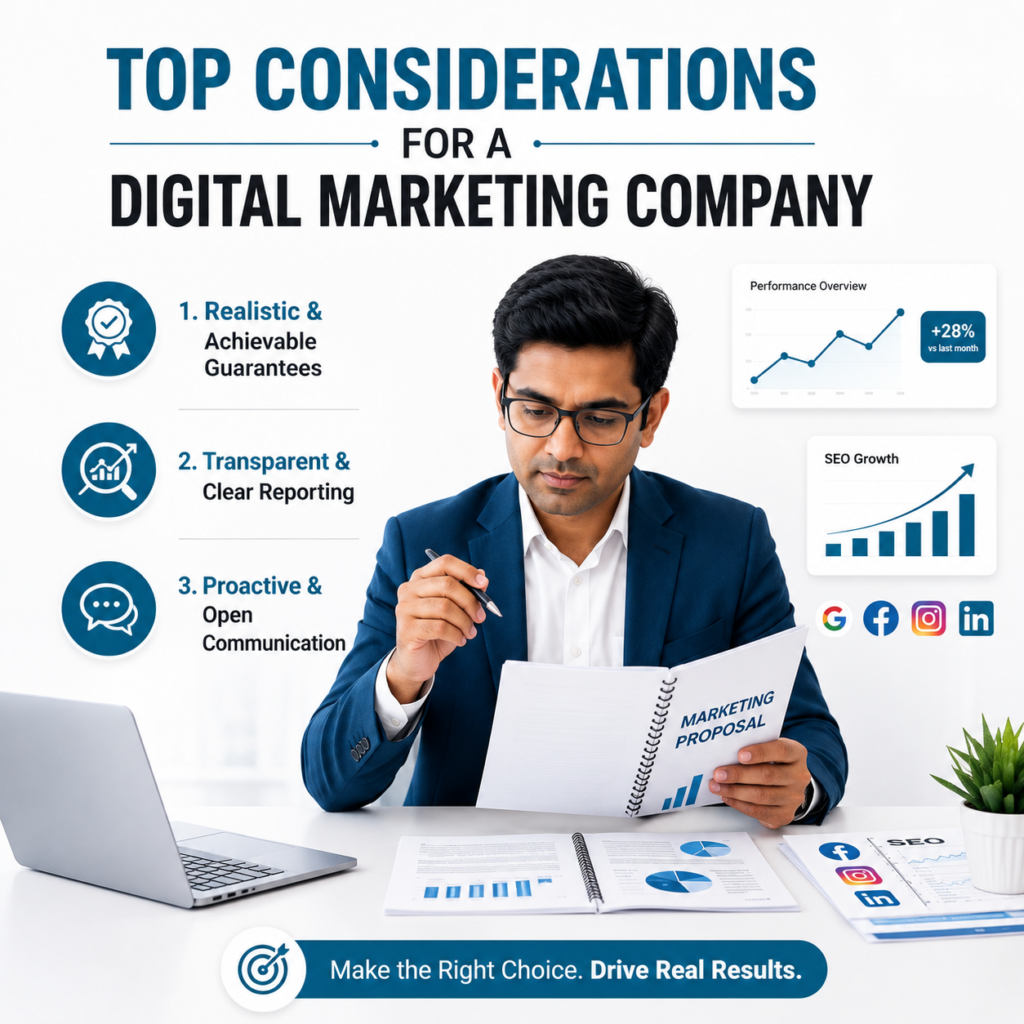
Transparency, communication, strategic depth, and measurable performance are essential qualities of a reliable agency partner. Companies should conduct extensive research, request case studies, ask detailed questions, and scrutinize contracts before committing.
The ideal marketing agency functions not merely as a service provider, but as a strategic collaborator invested in long-term business success. Identifying red flags early can protect organizations from costly mistakes and position them for sustainable digital growth.
organisations